


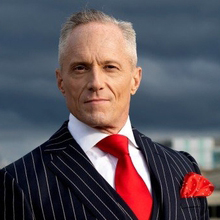
Colonel Douglas Macgregor Bio:
Douglas Macgregor, a retired US Army Colonel, is a decorated combat veteran, author, and foreign policy expert who is renowned for his leadership in the Battle of 73 Easting during the Gulf War – the US Army’s largest tank battle since World War II.
His distinguished career began in 1976 when he was commissioned into the Regular Army after completing his studies at the Virginia Military Institute and West Point. During his 28 years of service, he held numerous leadership positions and taught in the Department of Social Sciences at West Point, while his innovative ideas on military transformation and force design have had a profound impact on the global stage, influencing policies in Israel, Russia, and China.
As an author, his groundbreaking ideas have resulted in five books, including Breaking The Phalanx and Transformation Under Fire, and seen him feature as a regular commentator on defense and foreign policy issues on various media platforms, including CNN, BBC, Sky, and Fox News, most notably as the go-to guy on Tucker Carlson’s now-defunct show.
In late 2020, Douglas was appointed Senior Advisor to the Secretary of Defense by then-President Donald Trump, a position he held until the end of the Trump administration, while he has also served as an expert witness before the Senate and House Armed Services Committees.
Douglas believes that Ukraine is being crushed, and it is only a matter of time before Russia assumes control of the Eastern part of the country if not all of Ukraine. He argues that the West, in particular the US, failed to prevent the conflict from starting in the first place.
He even goes so far as to suggest that Ukraine may not even exist as a nation-state by the end of 2023 due to the dire conditions in the country, which sound more shocking thanks to the false narratives surrounding events circulating in the mainstream news.
Douglas has repeatedly called for transparency from the major media outlets, arguing that they are hiding the reality of the situation, meaning most Americans cannot discern the real situation at play.
But why is this the case, and why is the US government so reluctant to tell the truth when many would argue that the escalating economic issues closer to home require equal attention? As Douglas points out, the American financial system is at risk of failing catastrophically, and the dollar as a global reserve currency is in serious trouble.
The following is an AI generated summary of the 44-minute video shown above, which was published on March 24, 2024 by LondonReal’s YouTube Channel.
- The West, led by Washington and London, has constructed what Colonel Macgregor calls an “Empire of lies” where falsehoods about Russia and Ukraine have been systematically propagated for years.
- Russia is not the aggressive force it’s portrayed as; instead, it launched an operation to protect its interests from encroaching NATO influence.
- The West’s efforts to weaken Russia and disregard its national security concerns have escalated tensions in the region.
- Events such as the coup in 2014, engineered by the West, provoked violent anti-Russian sentiments in Ukraine and led to a conflict where Russian civilians were targeted.
Russia is by no means the evil aggressor in this… systematically we have lied about everything involving Russia and Ukraine now for months if not years. – Colonel Douglas Macgregor
The Ukrainian Conflict and Russian Intervention
- The conflict in Ukraine stemmed from a coup orchestrated by the West in 2014, placing anti-Russian factions in power.
- The Ukrainian Army, supported by Western funds, initiated attacks on Russian-speaking regions in eastern Ukraine, resulting in civilian casualties and oppression.
- The Minsk Accords, purportedly aimed at peace, were exposed as a delay tactic by Western leaders, prompting Russia to intervene to prevent potential threats to its territories.
The Russians said no thank you. – Colonel Douglas Macgregor
Deception in Military Conflicts
- The Russian generals realized their mistake in assuming negotiations were possible, leading to a small initial force of around 990,000 troops. However, they discovered the Ukrainians were reluctant to negotiate and suffered heavy casualties. This shifted the focus to preparing for a full-scale war, including mobilizing reserves and re-equipping. The decision to hold off on an offensive due to unfavorable weather conditions was strategic, considering the challenging terrain.
The generals miscalculated assuming negotiations were possible. They mobilized forces but had to shift focus to preparing for a full-scale war due to the Ukrainians’ resistance. The decision to delay the offensive due to weather conditions highlights strategic thinking.
Media’s Role in Perpetuating Deception
- Colonel Macgregor highlights the scale of media involvement in perpetuating deception during the conflict, drawing parallels to historical instances like the Vietnam War. He notes that in earlier conflicts, the media often initially portrayed a biased view. However, as events unfolded, the truth became apparent, leading to a shift in reporting towards more accurate depictions of the reality of the situation.
The Colonel emphasizes the media’s historical involvement in portraying biased views in conflicts. While early reporting may have skewed the truth, eventual events forced a shift towards more accurate reporting of the realities on the ground.
The Role of Journalists and Truth Seekers
- Seymour Hersh, known for his past truthful reporting, faces challenges having his articles on Nordstream and the Ukraine situation published, indicating a shift in journalistic integrity.
- Colonel Macgregor recognizes Seymour Hersh’s bravery in reporting the truth, acknowledging occasional inaccuracies in minor details but affirming the overall accuracy and value of his reporting.
- The media landscape seems to have undergone a significant shift, with journalists facing obstacles in reporting certain truths, as seen in Hersh’s case.
“Seymour Hersh is a very brave man and he does the best that he can to report the truth… I think he’s telling the truth this time around about Nordstream.”
US Government Mistakes in Foreign Policy
- Colonel Douglas Macgregor criticizes the US government’s foreign policy decisions, particularly regarding interventions in Ukraine and Iraq, which he views as unnecessary and poorly thought out.
- He highlights the lack of clear objectives and purpose in these interventions, emphasizing the importance of having rational and attainable goals before engaging in military actions.
- Macgregor laments the US approach of involving itself in the internal affairs of other countries and not respecting their cultures, which he sees as a detrimental trend.
- The Colonel emphasizes the need for a strategic purpose when utilizing military power, cautioning against using it solely for the sake of using it, as he believes this approach is damaging to the country.
“We made terrible mistakes, we walked into this thing in Iraq without understanding any of it… I never saw any serious thought given to purpose, method, and end state.”
Critique of US Political Environment
- Macgregor expresses concerns about the political landscape in the United States, pointing out issues such as the loss of freedoms, economic challenges, and the influence of elites in decision-making.
- He highlights the lack of significant differences between political parties, stating that both sides seem to benefit from the current state of affairs at the expense of ordinary Americans.
- The Colonel questions the potential impact of future elections, expressing skepticism about the effectiveness of the current system, especially with absentee ballots raising concerns about corruption.
- He underscores the need to address the real problems facing the country, including the erosion of constitutional rights and the negative consequences of past economic decisions.
“The only people suffering in the United States are Americans… the Americans are the ones who don’t have the protection of the police, who don’t enjoy the Bill of Rights.”
Concerns about International Relations and Military Actions
- Macgregor warns against the dangerous shift in US nuclear weapons policy under President Biden, highlighting the potential repercussions of reserving the right to use nuclear weapons more liberally.
- He criticizes the handling of the Ukraine crisis, arguing that it is a manufactured conflict and not a situation initiated by Russia for aggressive purposes.
- The Colonel stresses the importance of understanding the intentions of other nations, cautioning against escalating tensions that could lead to disastrous consequences such as nuclear conflict.
- He notes the emergence of a formidable Russian military that surpasses Chinese capabilities, suggesting that this unintended consequence of US actions poses a significant threat.
“He’s open Pandora’s Box which I think is sheer unadulterated lunacy… this is not something that Russia set out to execute.”
US Perception of Russia vs. China
- The US government has historically portrayed Russia in a negative light, fueling a sense of fear and animosity towards the country, reminiscent of the Cold War era.
- Contrary to the concerns raised about Russia, there is a lack of evidence suggesting that Putin’s agenda involves the use of nuclear weapons.
- Misguided statements from officials in Washington about Russia potentially engaging in nuclear warfare are deemed unwarranted.
- “I don’t see any evidence for that on Mr. Putin’s agenda at all.”
“We need to understand that, and I don’t see any evidence for that on Mr. Putin’s agenda at all.”
China’s Intentions and Governance
- China’s intentions and military capabilities are often misrepresented, leading to unnecessary demonization by Western nations, primarily the US.
- While China differs in ideology from Western democracies, they prioritize stability, economic growth, and control over personal freedoms.
- Chinese society values stringent government control to ensure economic prosperity and social order, diverging from Western ideologies.
- “the Chinese on Taiwan and the Chinese in Beijing generally share similar goals”
“The Chinese are not like us at all. The Chinese and China, and for that matter to a large extent, I would argue the Japanese and Koreans, although they have their own version, all admire and want to imitate Singapore.” – Colonel Douglas Macgregor
Challenges Faced by China and Xi Jinping’s Concerns
- Xi Jinping’s leadership in China is primarily focused on addressing critical domestic issues such as unemployment, corruption, and defending the nation.
- Under Xi’s governance, China is keen on eradicating corruption through strict measures like incarceration and execution, reflecting the paramount importance placed on integrity.
- Challenges such as economic disparities, unemployment rates among Chinese men, and maintaining social order compel Xi to prioritize internal stability.
- “Xi has a tough problem. He wakes up every morning worried about all of those things.”
Immigration Issues and Government Inaction
- Colonel Douglas Macgregor highlights the analogy of the US being a “Lifeboat” in danger of sinking due to current immigration challenges. He mentions the risks associated with allowing uncontrolled migration, including criminality and the strain on resources.
- There is concern about the lack of enforcement of immigration laws, leading to tragic incidents like illegal immigrants committing violent crimes.
- The influence of certain political figures, allegedly backed by George Soros, is criticized for what is perceived as a deliberate lack of law enforcement to drive a specific agenda.
- Colonel Macgregor expresses frustration with the current system, citing a government structure from the 1780s that is inadequate for the country’s current size and complexity.
“Anyway, the bottom line is that we’re a Lifeboat… we have this government that refuses to enforce the law… they were backed with enormous money from George Soros… it’s broken and we’re being overwhelmed for all these reasons with the collusion of our own government and media…”
Concerns about Election Integrity and the Future
- Colonel Macgregor questions the confidence in the electoral system, hinting at a scenario where significant portions of the electorate may lose trust in the system’s functionality.
- Issues related to confidence in institutions and implications for the financial system are raised, alongside the potential tipping point where Americans might reject the current state of affairs.
“Everything is a function of confidence… when do you think the financial system will collapse?… I just don’t know if we’ll get that far… it’s almost rural versus Urban in some ways reminiscent of what I saw… but it’s worse.”
Author


Leave a Reply